
Vestibular Rehab in Corona, California
At Beyond Care Physical Therapy and Wellness, we understand how disruptive these symptoms can be. That’s why we offer Vestibular Rehabilitation Therapy (VRT), a safe, non-invasive, and highly effective treatment designed to help your brain and body work together again in harmony.
Click The Video Below To Learn about Vestibular Rehabilitation
Most people don’t realize how much they rely on their balance system – until something goes wrong. When dizziness, vertigo, or unsteadiness appear, they can feel overwhelming and even frightening. These issues don’t just cause discomfort; they interfere with the simplest daily activities, like walking across a room, driving, reading, or even getting out of bed in the morning.
What is Vestibular Rehabilitation?
Vestibular Rehabilitation is a specialized form of therapy aimed at treating dizziness, vertigo, imbalance, and other problems related to the inner ear and balance system. These conditions may stem from vestibular disorders, head injuries, neurological conditions, or even something as simple as age-related changes in the balance system.
The good news is that vestibular issues are treatable – and physical therapy plays a powerful role in recovery.
At Beyond Care, we use evidence-based exercises that are carefully tailored to your symptoms and needs. These may include:
Balance training to improve steadiness and coordination
Gaze stabilization exercises to help with blurry vision or dizziness when moving your head
Habituation exercises to reduce sensitivity to movements that trigger vertigo
Functional movement training to help with everyday activities such as bending, standing, or walking confidently
Our goal is not only to reduce dizziness and improve balance but also to restore your independence, safety, and quality of life.
More Than Symptom Relief
We believe that true rehabilitation is about more than just easing symptoms. Yes, vestibular therapy helps with dizziness and vertigo, but it also gives patients the tools and confidence they need to live fully again.
With consistent therapy and personalized care, many of our patients find they can return to activities they once avoided out of fear. Whether that means going for walks, driving again, or simply moving around the house without worry, we’re here to help you regain the confidence to move freely.
What sets Beyond Care apart is our patient-first, one-on-one approach. We don’t just treat the condition – we treat the person. Every vestibular rehabilitation plan we design is individualized, because every patient’s journey is different.
From your first visit, we take the time to listen, understand your unique challenges, and guide you through each step of recovery. Along the way, we provide encouragement, education, and support for you and your loved ones, so that progress feels both achievable and lasting.
Our therapists are experienced in vestibular rehabilitation and committed to helping you not only get better but stay better.
Request A Call Back from a physical therapist
If you’re not quite ready to book an appointment yet and have some questions you would like answered first, click the link below to complete a form to get the conversation started.


Who Benefits from Vestibular Rehabilitation Therapy?
VRT may be recommended for individuals experiencing dizziness or imbalance due to:
A sensation of spinning or dizziness that can be caused by inner ear problems or other vestibular disorders.
A common cause of vertigo that occurs when tiny calcium crystals in the inner ear become dislodged, leading to brief episodes of dizziness with changes in head position.
A chronic condition characterized by episodes of vertigo, hearing loss, tinnitus, and a feeling of fullness in the ear, often related to fluid buildup in the inner ear.
A disruption of blood flow to the brain that can lead to various neurological symptoms, including dizziness and balance problems.
Inflammation of the inner ear structures (the labyrinth) that can cause vertigo, hearing loss, and balance issues, often following an infection.
Inflammation of the vestibular nerve, usually due to a viral infection, leading to sudden, severe vertigo and balance difficulties.
Dizziness that occurs in conjunction with migraine headaches, which can include vertigo and balance disturbances.
Injuries to the brain resulting from external forces, which can affect balance and vestibular function.
Individuals who are at risk of falling due to balance issues, weakness, or other factors may benefit from VRT to improve stability and reduce fall risk.
How Does Vestibular Rehabilitation Work?
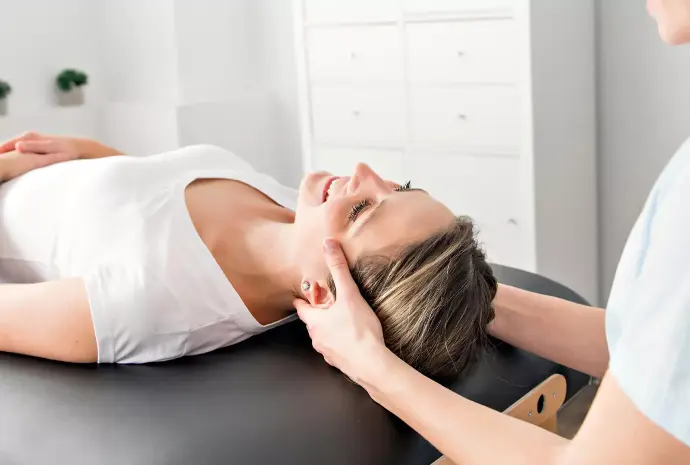
Balance System
Your sense of balance relies on a complex communication system between your brain, eyes, inner ear (vestibular system), and musculoskeletal system. When this system is disrupted—due to illness, injury, or neurological conditions—you may experience dizziness, disorientation, or imbalance.
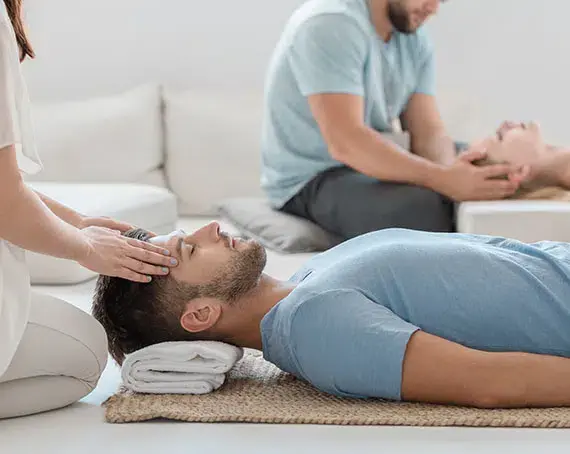
Rehabilitation Therapy
Vestibular rehabilitation therapy works by retraining your brain to compensate for vestibular system disruptions. Through a series of targeted exercises, your nervous system learns to interpret signals more accurately and maintain balance more effectively.
Request A Free Discovery Visit
Are you unsure if physical therapy is right for you? Take advantage of our FREE discovery sessions which help identify your issues and if we can provide help!
Systems That Influence Balance
Understanding the risk factors can help in early identification and management. Here are the key factors:
Inner Ear (Vestibular System)
Detects motion and gravity.
Vision
Helps orient your body in space.
Muscles and Joints
Provide feedback about movement and positioning.
Brain (Central Nervous System)
Processes sensory input to maintain equilibrium. When any of these systems are not functioning properly, symptoms like unsteadiness, lightheadedness, or spinning sensations (vertigo) may occur. VRT helps restore balance by strengthening the connections between these systems.
What to Expect During Treatment
Before Therapy Begins
To perform vestibular testing (e.g., vestibular test battery).
To evaluate your posture, strength, gait, and flexibility.
During Therapy
Eye movement and gaze stabilization exercises.
Balance retraining activities.
Stretching and coordination drills.
Postural and core strengthening.
Program Duration
Most individuals benefit from 6–8 weekly sessions, while some may require fewer or more, depending on their progress. The length of your VRT program depends on :

Underlying Cause
The root cause of your symptoms plays a key role in determining how long your VRT program will take.

Severity and Duration
The intensity and length of time you’ve experienced dizziness will influence your recovery timeline.

Exercise Adherence
Your consistency and commitment to following the prescribed home exercise program greatly affect your progress.
Pharmacological Interventions
Managing Parkinson’s disease (PD) involves a comprehensive approach, including pharmacological interventions that target both the underlying physiological changes and the symptoms associated with the condition. While no medication can reverse or halt the progression of PD, various treatments can significantly improve quality of life.
Benefits of Vestibular Rehabilitation
Reduce the frequency and intensity of dizziness
Improve balance and reduce fall risk
Enhance visual stability (especially during head movement)
Boost overall strength and coordination
Reduce the frequency and intensity of dizziness
Are There Any Risks
Sudden or significant hearing changes
Ear pain, pressure, or fluid drainage
Increased ringing in the ears
Neck or back discomfort during exercises
Your Recovery Outlook
With consistent therapy and commitment to home exercises, most individuals report significant improvement in their symptoms and a return to normal daily activities. Some may achieve full resolution, while others will gain tools to manage symptoms long-term.
Frequent dizziness
Regular episodes of dizziness may indicate an underlying condition that requires professional assessment.
Unexplained imbalance
If you feel off-balance without a clear reason, it could signal a problem with your vestibular system.
Trouble walking or standing without support
Needing support to walk or stand may point to coordination or strength issues needing physiotherapy.
A history of falls
Repeated falls increase the risk of serious injury and should be addressed through targeted rehabilitation.
Need To Know More About Cost and Availability?
If you’d like to find out more information about the cost and availability of our services click the button below to complete a short form, a member our team will then reach out.
What to Expect from Vestibular Rehabilitation Therapy (VRT)
Vestibular Rehabilitation Therapy (VRT) is typically provided on an outpatient basis, though it may be initiated in a hospital setting when necessary. Treatment is delivered by licensed physical or occupational therapists who have advanced training in vestibular rehabilitation.
Comprehensive Assessment
VRT begins with a thorough clinical evaluation. This includes a detailed history of your symptoms—how they started, what triggers them, and how they impact your daily life. Your therapist will also ask about your: Sure! Here’s a one-line description for each point:
Medications
Your therapist will review your current and past medications to identify any that may affect your symptoms or treatment.
Vision and hearing
An assessment of your vision and hearing will help determine if sensory deficits contribute to your condition.
Medical history
A comprehensive medical history will provide context for your symptoms and any underlying health issues.
History of falls
Understanding your history of falls can help identify risk factors and inform your treatment plan.
Current and past activity levels
Your activity levels will be evaluated to gauge your physical fitness and any limitations you may have.
Home and living situation
Your living environment will be assessed to identify potential hazards and support needs for your rehabilitation.
To better understand your condition, the therapist will perform a series of tests to assess:
VRT begins with a thorough clinical evaluation. This includes a detailed history of your symptoms—how they started, what triggers them, and how they impact your daily life. Your therapist will also ask about your: Sure! Here’s a one-line description for each point:
Eye movement control and coordination
Tests will evaluate how well your eyes move and coordinate, which is crucial for balance and spatial awareness.
Balance and posture
Assessing your balance and posture will help identify any deficits that may contribute to instability.
Walking and mobility
Your walking patterns and overall mobility will be examined to determine functional capabilities and limitations.
Muscle strength and joint range of motion
Evaluating muscle strength and joint flexibility will help identify areas that may require strengthening or rehabilitation.
Sensory function, including pain and touch
Tests will assess your sensory responses to pain and touch, which can impact balance and coordination.
Vestibular system and visual interaction
The interaction between your vestibular system and visual input will be assessed to understand how they affect your balance and spatial orientation.
Personalized Treatment Plan
Using information gathered from the assessment—as well as any lab tests or imaging studies—your therapist will develop a customized exercise program tailored to your specific diagnosis and goals.
A patient with Benign Paroxysmal Positional Vertigo (BPPV) may benefit from canal repositioning maneuvers to relieve spinning sensations.
Someone with vestibular neuritis, experiencing dizziness and gaze instability, may be prescribed gaze stabilization and habituation exercises.
If balance is affected, targeted balance training will be included.
Habituation exercises
A Targeted Approach to Reducing Motion- and Visually-Induced Dizziness
Habituation exercises are a specialized form of vestibular rehabilitation designed to help individuals who experience dizziness triggered by motion or visually stimulating environments. These exercises aim to reduce the sensitivity of the brain to certain movements or visual cues that typically provoke symptoms.
Who Can Benefit from Habituation exercises?
Habituation exercises are especially effective for patients who:
Experience dizziness with self-motion, such as:
- Bending over
- Turning quickly
- Looking up or reaching overhead
Have increased dizziness when changing positions, like:
- Going from lying to sitting
- Rolling in bed
Are sensitive to visually busy environments, including:
- Grocery stores or shopping malls
- Watching fast-paced movies or TV
- Walking on patterned carpets or shiny floors
The goal of habituation exercises is to desensitize the brain to the specific movements or visual stimuli that cause dizziness. This is accomplished through controlled, repeated exposure to those triggers in a safe and gradual manner.
Each exercise is carefully selected to mildly or moderately provoke symptoms—not overwhelm the patient. Over time, as the brain is repeatedly exposed to these stimuli, it begins to adapt and “tune out” the abnormal signals, thereby reducing the intensity and frequency of dizziness.
This process is called neuroadaptation. With consistent practice and perseverance, the brain learns to respond more appropriately to motion or sensory input, resulting in a reduction in dizziness.
Commitment is Crucial
Success with habituation exercises depends heavily on compliance and regular practice. Missing sessions or stopping the exercises too soon can delay or limit progress. Your therapist will guide you on how to perform the exercises safely and will adjust your program as you improve.
If you or someone you know experiences dizziness brought on by movement or busy visual environments, speak to a physical therapist trained in vestibular rehabilitation. Habituation therapy may be the key to reducing symptoms and restoring comfort in your everyday life.
Exercises are customized to the patient’s specific triggers.
Movements may include repetitive head turns, position changes, or visual tracking tasks.
Symptoms may temporarily increase during or after exercise—that’s expected and necessary for progress.
Patients are encouraged to perform their exercises 1–2 times daily as prescribed.
Improvement typically occurs over several weeks, depending on consistency and individual response.
Desensitizes the vestibular system to motion and visual triggers
Reduces the intensity and duration of dizziness symptoms
Improves tolerance to daily activities and environments
Enhances confidence in movement and reduces fear of motion
Gaze Stabilization Exercises
Improving Vision Clarity During Head Movement
Gaze stabilization exercises are a key component of vestibular rehabilitation therapy. These exercises are designed to help improve the control of eye movements, so vision remains clear even when the head is in motion.
Who Can Benefit from Habituation exercises?
Struggle with blurry or unstable vision during head movement
Report that their visual environment seems to bounce, shake, or jump—a symptom known as oscillopsia
Have difficulty with tasks like: Reading, Walking while scanning the environment, Identifying objects while turning the head.
These symptoms are often associated with vestibular disorders that affect the brain’s ability to coordinate eye and head movements.
Gaze stabilization exercises aim to retrain the vestibulo-ocular reflex (VOR)—a reflex that stabilizes vision by producing eye movements that counter head motion.
There are two main types of exercises used to improve gaze stability:
Adaptation Exercises
- Used when the vestibular system still has some function
- Focus on recalibrating the VOR to reduce symptoms
- Typically involve repetitive head movements while keeping the eyes fixed on a stationary target
Substitution Exercises
- Used when vestibular function is significantly reduced or absent
- Teach the brain to use alternative strategies (like eye or neck movements) to maintain visual stability
The type and intensity of exercises prescribed depend on the nature and extent of the vestibular dysfunction.
Gaze stabilization is a critical part of vestibular rehabilitation and can significantly improve quality of life for those experiencing visual disturbances due to vestibular disorders. A physical therapist with vestibular training can evaluate your needs and guide you through a customized gaze stabilization program.
Exercises often involve focusing on a visual target while performing head movements in various directions.
Patients may start with seated exercises and progress to standing or walking tasks as they improve.
It is normal to feel some mild dizziness or fatigue during or after exercises—this means the brain is working to adapt.
Exercises should be performed daily, as recommended by your therapist, for optimal results.
Key Benefits
- Improved visual clarity during daily activities
- Reduced symptoms of dizziness and disorientation
- Enhanced reading ability and functional mobility
- Better coordination of eye and head movements
Gaze Stabilization Exercises
Balance training exercises are designed to enhance stability and coordination, enabling individuals to perform daily activities—such as self-care, work, and recreation—more safely and effectively. These exercises are tailored to address each patient’s specific balance issues and must be moderately challenging to promote improvement, while remaining safe enough to prevent falls.
A key component of balance training is reducing fall risk and overcoming environmental barriers. Exercises may focus on improving stability when walking on uneven terrain, in low-light conditions, or in other real-world situations.
It’s important to note that for individuals with Benign Paroxysmal Positional Vertigo (BPPV), traditional balance exercises are not effective in treating the root cause of their symptoms. BPPV requires a specialized assessment to determine the specific type, followed by appropriate repositioning maneuvers to relieve the spinning sensation triggered by positional changes.
Home Exercise Program
A vital component of VRT is a structured home exercise program. Regular practice of these exercises is essential to improve your symptoms and achieve your rehabilitation goals. Your therapist will guide you through how and when to perform these exercises safely at home.
Education and Support
Education is a key part of vestibular rehabilitation. Understanding the cause of your symptoms and how VRT can help often reduces the anxiety that comes with vestibular disorders. Therapists will explain the science behind your condition and offer strategies for managing symptoms in everyday situations. This knowledge empowers both patients and caregivers to take an active role in the recovery process.
Decompensation
Sometimes, symptoms may return due to decompensation, where the brain loses some of the adaptations it had previously made. This can be triggered by:
Physical or emotional stress
Illness (e.g., cold or flu)
Fatigue or sleep deprivation
Medication changes
Periods of inactivity
Surgery
FAQ's & Info
Vestibular rehabilitation exercises are not difficult to learn—but that doesn’t mean they’re always easy to do.
The exercises can feel repetitive or tedious at times, and they may initially make your symptoms feel more noticeable. However, this temporary discomfort is a normal part of the process. With consistent effort and practice, your symptoms should gradually improve, helping you regain stability and confidence in your daily activities.
Committing to a regular routine is essential for success. Building these exercises into your daily schedule—just like brushing your teeth—can make a big difference in your progress.
Remember, the effort you put in now will help you get back to doing the things you enjoy with greater ease and comfort.
Several factors can influence how well a person responds to Vestibular Rehabilitation (VR). One of the most important is the type of vestibular disorder involved.
Patients with stable, non-progressive conditions—such as vestibular neuritis or labyrinthitis—typically have a higher likelihood of achieving significant symptom relief through VR. These conditions often allow for better compensation by the brain and nervous system.
In contrast, individuals with progressive disorders like multiple sclerosis, or fluctuating conditions such as vestibular migraine or Meniere’s disease, may face more challenges. These conditions can cause unpredictable episodes of dizziness or vertigo, making consistent progress with rehabilitation more difficult.
Recovery can also vary depending on:
- Whether one or both inner ears are affected
- Whether the issue originates in the inner ear or the vestibular areas of the brain
Each case is unique, and a thorough evaluation by a vestibular therapist can help determine the most effective treatment approach based on your specific diagnosis and needs.
Other Factors That Can Potentially Limit Recovery
In addition to the type of vestibular disorder, several other factors can influence your recovery during Vestibular Rehabilitation Therapy (VRT):
- Sedentary Lifestyle
Physical inactivity can slow progress. Staying active, including participating in group exercise classes or working with a trainer familiar with vestibular issues, can support recovery.
(Learn more: [Group Exercise Classes and Personal Trainers for Dizziness]) - Pain
Chronic pain can limit movement and reduce participation in rehabilitation exercises. - Other Medical Conditions
Conditions like diabetes, cardiovascular disease, or neurological disorders may complicate recovery. - Medications
Certain medications—or taking multiple medications—can interfere with the brain’s ability to adapt.
(Learn more: [Medication])
Emotional Concerns
Anxiety, depression, and stress can heighten dizziness symptoms and affect motivation and consistency in doing exercises.
Take the First Step Toward Feeling Steady Again
If you or someone you love is struggling with dizziness, vertigo, or balance issues, know that there is hope and there is help. You don’t have to live with the constant fear of losing your balance or the frustration of not being able to do the things you enjoy.